
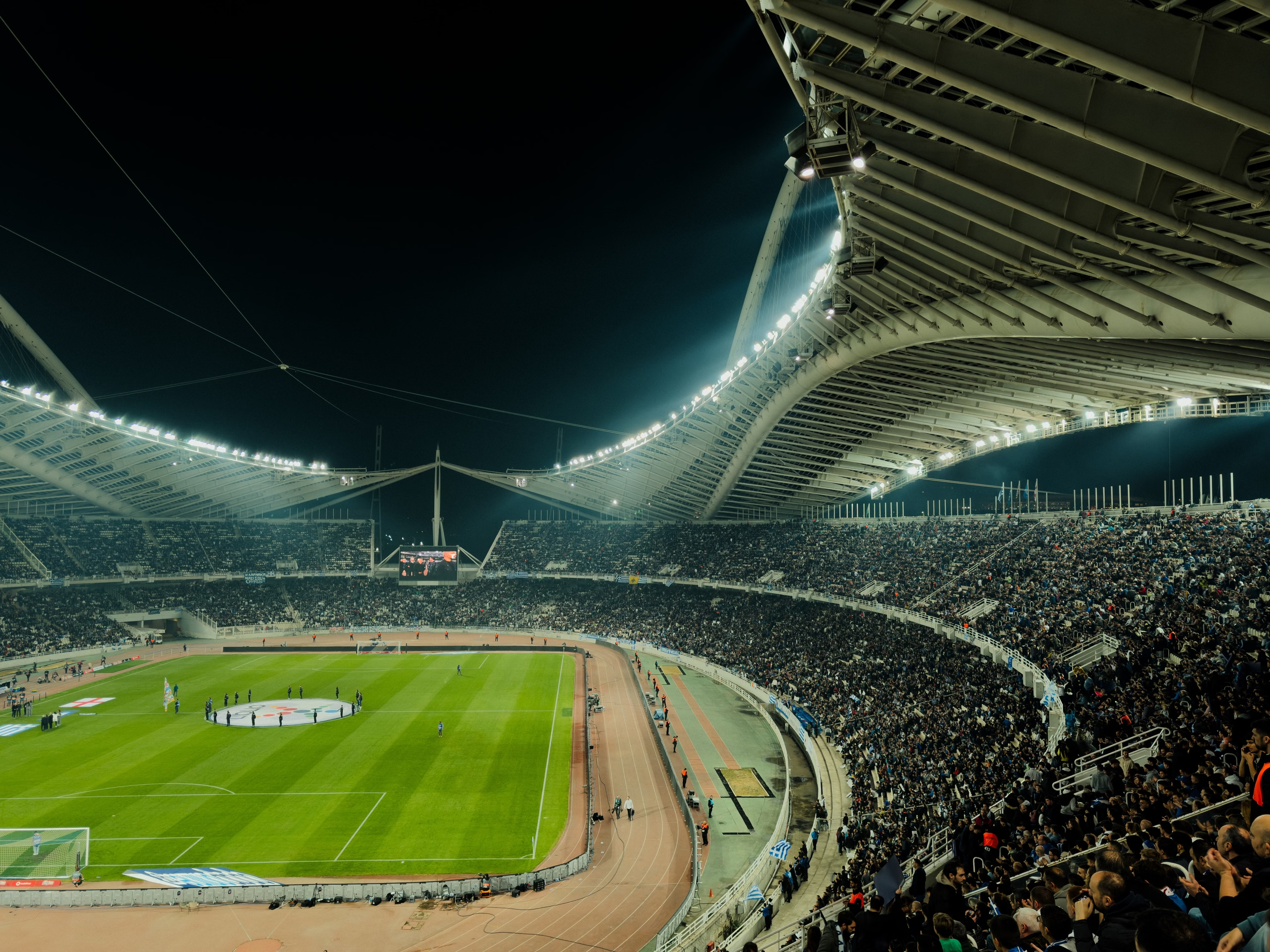
Open any season of data from the major European leagues and the same shape appears. The first forty-five minutes produce fewer goals than the second, and the gap is not small. Across top flights, roughly 55 percent of goals land after the break, and the final fifteen minutes alone often outscore any other quarter hour on the clock.
Fans who follow match statistics through a tool such as x3bet online can see this pattern in the minute by minute breakdowns, where the late bars climb higher than the early ones. The reasons are less mysterious than they look, and most of them come down to bodies, tactics and nerves.
Fatigue Opens the Pitch
A player in the top divisions covers somewhere around 10 to 12 kilometres per match. Much of the high intensity running happens early, and by the 60th minute the legs are heavier. By the hour mark the compact block of the opening quarter has loosened, and a through ball that would have been intercepted at minute 15 now finds a runner.
Tired defenders also misjudge timing. Half a second of lateness on a challenge turns a harmless build up into a shot from six yards. Think of a full back with seventy minutes of flank sprinting behind him. His marker drifts infield, the follow arrives a beat behind, and the assist is created in that small gap. Sports scientists tracking sprint counts have long noted that the number of high speed efforts drops steadily as a match goes on, while the quality of finishing barely changes.
Coaches Change the Game at Halftime
The break is the only moment when a manager speaks to the whole team without shouting across a stadium. Fifteen minutes in the dressing room can swap a conservative script for a braver one, because the coach has now watched the rival’s weak side for a whole half.
Substitutions add to this. Fresh wingers and strikers arrive against defenders who have already run for an hour, and rules now allow five changes in many competitions, which gives benches real weight. A coach with a deep squad can bring on a striker who scored fifteen times off the bench in a season, and opponents rarely have an answer ready.
What the Numbers Show by Period
The table below gives an illustrative split of goals by 15 minute block, rounded from the sort of figures that appear in multi season league samples.
| Period | Share of goals | What usually drives it |
| 1 to 15 | 14 percent | Cautious starts, set plans |
| 16 to 30 | 15 percent | Teams settle into rhythm |
| 31 to 45 | 17 percent | Pressure before the break |
| 46 to 60 | 17 percent | Tactical changes land |
| Between 61 and 75 | about 18 percent | Late changes |
| 76 to 90 | 19 percent | Stretched teams, long injury time |
Stoppage time deserves its own mention. Games running six to ten minutes past the ninetieth hand the last block more weight because every goal in the bonus spell is credited to it, inflating its share of goals. Nothing separates a goal in minute ninety four from one in minute ten on the scoresheet, yet the late one tends to decide far more league tables, cup ties and tempers.
The Mental Side of a Tight Match
Each scoreline hands the coaches a different script for the final stretch. Tied matches pose a puzzle for both teams since a win means loosening the defensive shape a little. The side in front drops toward its box while the chasers advance, so gaps open between defence and midfield. Neither approach is wrong in theory. A stranded defender spotted first is usually punished within seconds, which is why many late winners begin as quick breaks.
Trailing Teams Gamble
In the closing minutes a trailing team may risk everything, with its goalkeeper standing near the halfway line and seven players camped around the opposing penalty spot. Another striker on the field raises the equaliser’s chances, while the space left at the back invites a fast opponent to sprint through.
Leaders Protect Rather Than Control
Teams ahead often sit back and invite pressure. Protecting a lead works for a long time, yet one deflection or set piece can undo it, and the 88th minute equaliser is quite familiar. Concentration plays a part too. A back line that held firm for eighty minutes may drift for one lapse of attention, and a single brief lapse is enough to concede.
Late goals rarely have a single cause behind them. Spread across ninety minutes, five forces build toward the finish:
- Physical tiredness that shrinks defensive coverage
- Halftime adjustments that make attacks sharper
- Fresh substitutes running at weary legs
- Narrow margins pushing managers toward much bigger risks
- Added minutes that extend the final block