
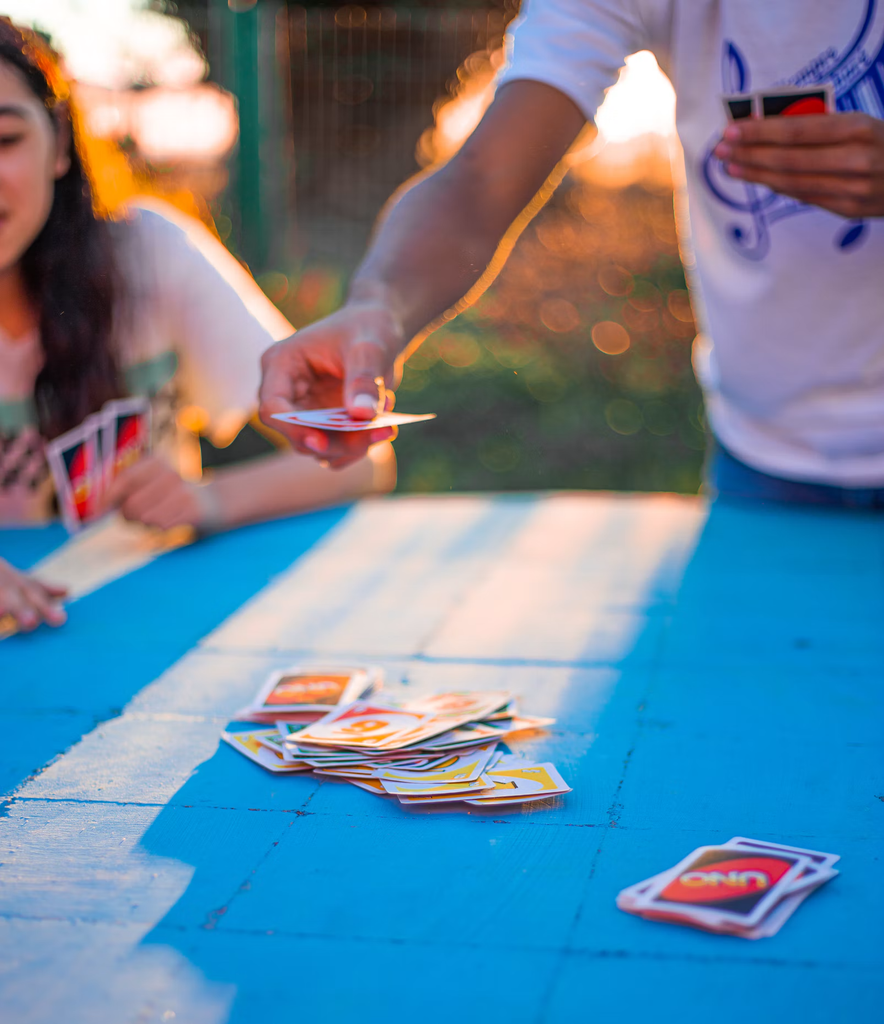
Kierki is the card game that fills Polish kitchen tables, train compartments and holiday cabins. Four players sit crosswise, each one plays alone, and the winner is whoever ends the evening with the fewest points lost. The odd part is that the rules of the hunt keep shifting. A card that is harmless in one deal can cost you dearly in the next.
A growing number of Poles rehearse these deals on a screen before the family gathers, and the catalogue at spin fin gives a sense of how table pastimes look once they move onto a phone. The big gain of a digital table is bookkeeping, since the app adds up penalties instantly, so your attention stays on the cards.
One Deck, Several Different Games
A game of kierki is really a sequence of mini games. The dealer announces a contract before the first card is played, and that contract decides which cards turn into liabilities. At a typical Sunday table that means seven calls, and every seat gets to name each one as the dealer’s chair travels clockwise.
That structure explains why newcomers lose so badly at first. They carry a habit from one contract into the next, keep winning tricks out of reflex, and discover that the same instinct now bleeds points. Seasoned players wipe the slate at each announcement and size up the new danger from zero.
How Penalty Points Are Scored Contract by Contract
Take a round with the hearts contract. At one Christmas table in Kraków, a player sat on six low hearts and a single top spade for most of a deal. Near the end he led that spade at last, and the host next to him was forced to scoop up a pile of hearts under very loud cheering. Call queens instead and those six hearts barely matter, since four ladies now carry the whole danger.
Count the dangerous cards before you lead anything. Before the second trick, ask which dangerous cards are still out, who probably holds them, and which suit you can safely lead to force them into the open.
| Contract | What costs points | Penalty per item |
| No tricks | Every trick you take | 20 |
| No hearts | Every heart you take | 20 |
| No queens | Each of the four queens | 60 |
| No men | Each jack and king | 30 |
| King of hearts | That single card | 150 |
| Seventh and last trick | Collecting round seven or round thirteen | 75 each |
The final contract, often called the robber, combines all of the above and is where games are usually decided. A player who has been careful all night can lose a lead of several hundred points there, so nobody relaxes until the last card hits the table.
Habits That Decide the Evening
Good kierki is less about holding strong cards and more about controlling who takes what. Three habits separate steady players from lucky ones.
No single plan lasts through seven different calls. The players who win most often adapt after every call, and remember that the cards worth fearing today are different from the ones they feared ten minutes ago.
Read the First Few Tricks
The opening tricks carry the most information. Suppose your neighbour throws away a big heart at once. That suggests hearts are not his worry, and a queen shed this early points to a daring character or a hand with almost nothing in that colour. Write nothing down, but notice everything.
You will often learn more from the card somebody refuses to play than from the one they put down.
Keep a Low Card in Reserve
In contracts where taking tricks hurts, a two or a three of a long suit is worth more than an ace. It lets you duck under the winner on the last round of that suit. Players who run out of small cards halfway through the deal usually end up wearing the next queen.
So guard the smallest card of every suit like spare pocket money, and spend it only once that suit has almost vanished.
Pass the Trouble Along
A discard dropped at precisely the right second gives kierki its sweetest little thrill. Once somebody leads a suit you no longer hold, you can drop the king of hearts or a queen onto the person currently winning that round. The art lies in waiting until the target cannot escape.
Do it too early and the victim sees it coming. Do it at the right moment and the table goes quiet, followed by laughter and a rematch.