
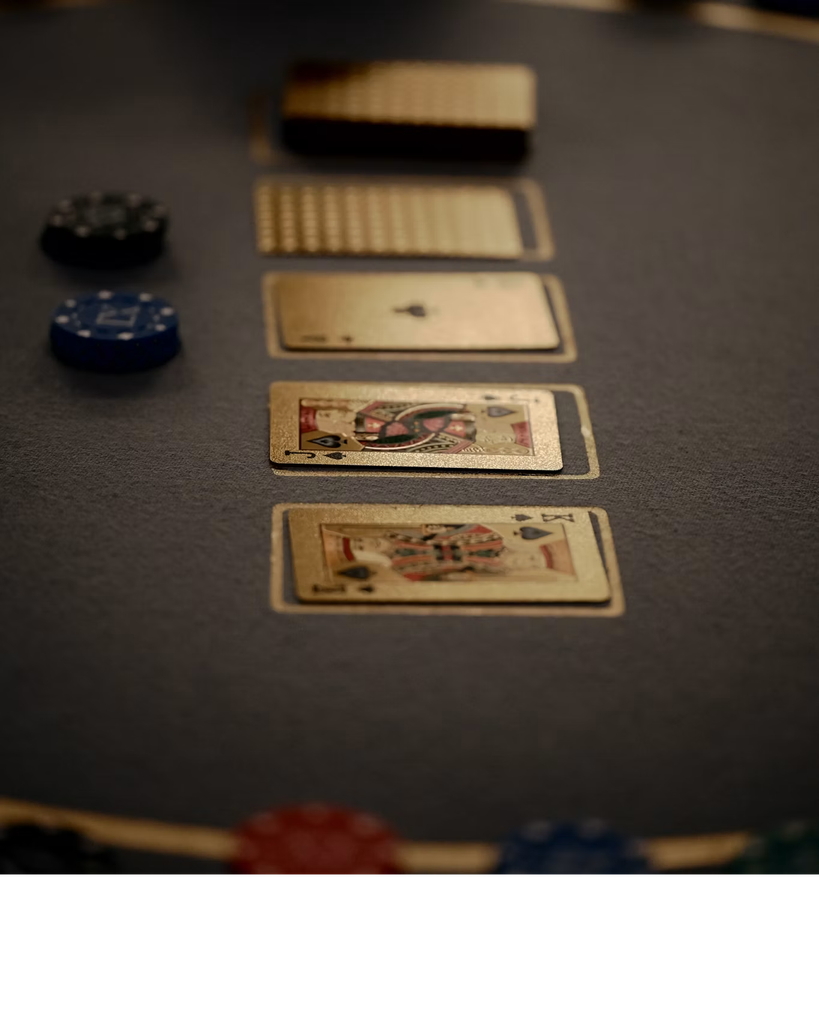
Card games rise and fall with fashion, but baccarat has quietly outlasted most of them by doing almost nothing to earn attention. There is no bluffing, no hand-reading, no moment where a player has to decide whether to hold or fold. Two hands are dealt, the numbers are added up, and whichever total is closer to nine wins. That flatness is exactly why the game has survived four centuries of shifting tastes in Venice, Havana, Macau and now on a phone screen at midnight.
Its persistence shows up in unexpected places, too. Online rooms such as casino sankra still keep a baccarat table listed near the top of their card-game menu, next to blackjack and poker, because regular players ask for it by name rather than stumbling onto it. That steady demand is rare for a game with almost no strategic depth, and it says more about the format than any marketing copy could.
A Game Built on Removing Decisions
Most card games reward the player who thinks the longest. Baccarat does the opposite: the drawing rules are fixed in advance, printed on the table felt, and neither the player nor the dealer gets to override them. A third card is drawn or withheld based on the two-card total alone, following a chart that has not changed in decades. Nobody at the table is smarter than anyone else, because nobody is making a real choice.
- The third-card rule is mechanical, so no amount of skill changes the outcome once bets are placed.
- A full hand resolves in under a minute, which keeps the rhythm brisk even at a crowded table.
- Scoring caps at nine, so mental arithmetic never goes past dropping the tens digit from a two-digit sum.
How the Numbers Actually Work
The banker bet carries a lower house edge than almost any other wager on a casino floor, which is unusual for a game associated with high rollers. That gap between banker, player and tie is wide enough that seasoned dealers can recite it without checking a reference card, and it explains why serious bettors gravitate toward one bet and mostly ignore the other two.
| Bet type | Approximate house edge | Typical payout |
| Banker | 1.06% | 0.95 to 1 |
| Player | 1.24% | 1 to 1 |
| Tie | 14.36% | 8 to 1 |
- Two cards are dealt face up to both the player and banker positions.
- Card values are summed, and only the last digit of the total counts.
- A fixed chart decides whether either hand draws a third card.
- The hand closest to nine wins, and losing bets are cleared before the next round.
Why Casinos Keep a Baccarat Table Near the Door
Floor managers place baccarat where new arrivals see it first, and that positioning is not accidental. The game photographs well, moves fast, and gives an impression of sophistication without requiring the newcomer to learn anything before sitting down. It is, in a sense, the front window of the whole floor.
The Ritual Appeal
Dealers slide cards from a shoe with a deliberate, unhurried motion that has become part of the game’s identity. Some tables still use the tradition of bending or “squeezing” the corners of a card before revealing it, a habit that adds theatre without changing a single outcome mathematically.
That small ceremony matters more than the odds do for a lot of regulars. Watching a card get slowly turned over builds tension that a plain flip never would, and it is one reason baccarat rooms feel distinct from the noisier slot floor a few steps away.
The Number Nine
Nine sits at the top of baccarat’s scoring range, and in several cultures that number carries a weight far beyond arithmetic. In Cantonese-speaking markets, nine sounds close to a word for enduring or lasting, which turned an accounting detail into something closer to a lucky charm over the course of the twentieth century.
That cultural resonance is a large part of why baccarat became the dominant table game across parts of Asia decades before it caught on elsewhere. The math never changed; the meaning attached to the number did, and the game rode that meaning into new markets.
Baccarat Beyond the Casino Floor
Live-streamed baccarat tables now run around the clock, with a single dealer serving thousands of remote players through a video feed instead of a felt-lined room. The rules stay identical to the physical version, down to the same third-card chart, which is part of why the transition to a screen felt so smooth compared with more decision-heavy games.
What has not survived the move online is the theatre of the squeeze, at least not in its original form, though some software now animates a slow card reveal to mimic it. The appeal that remains is the same one that kept baccarat alive through every previous shift in fashion: nobody has to learn anything to sit down and understand exactly what just happened.