
Reward gaming portals in Vietnam didn’t arrive fully formed. They evolved — sometimes smoothly, sometimes through visible missteps — from rudimentary browser-based sites toward the sophisticated, mobile-native, multi-format products that experienced players use today. Understanding that evolution helps explain why current portals look the way they do, and why the ones that have kept pace with each phase of development hold a different position than those that stopped evolving at an earlier stage.
Hitclub is a reward gaming portal that reflects the current end of this evolutionary arc — not the beginning of it. To understand what it has become, and why players choose it over earlier-generation alternatives, the story of how the category got here is worth telling.
Like most enduring products in this space, GO88 didn’t look in 2015 the way it looks today. The portal has changed — in mobile experience, in game variety, in reward structure — because the market changed around it. The same is true for Hitclub, which represents a point in a continuing trajectory rather than a fixed endpoint.
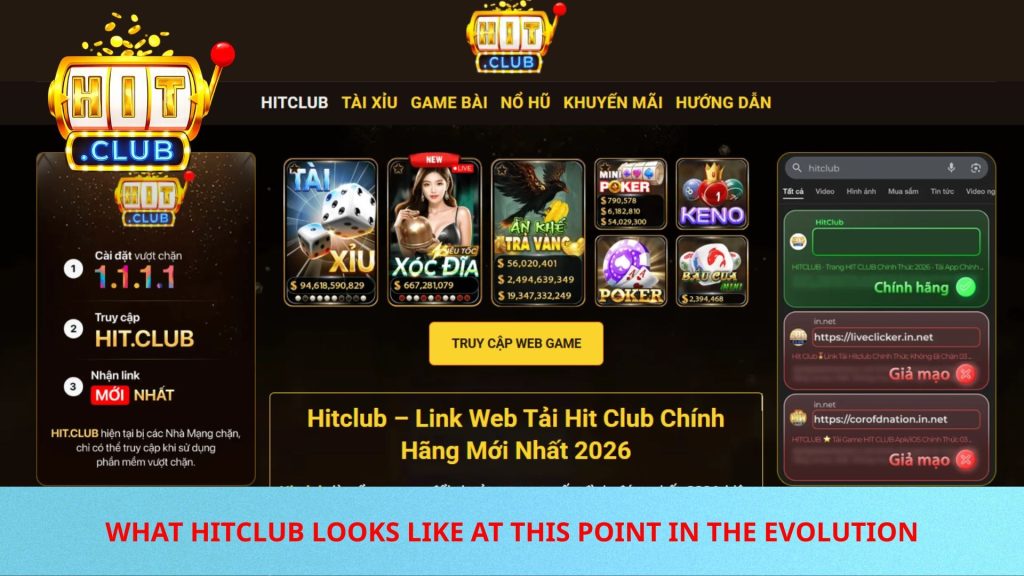
What Hitclub Looks Like at This Point in the Evolution
The Hitclub game portal currently operates across 4 categories: card games (Tiến Lên, Phỏm, Mậu Binh, Poker), jackpot slots with progressive prize mechanics, live dealer tables with real-time streamed sessions, and arcade-style mini games. This structure is the result of decisions accumulated over years of operating in a market that has been consistently raising its own standards.
How the Reward Gaming Portal Category Has Evolved
Generation 1 — The Browser Era and Its Limitations
The earliest Vietnamese reward gaming portals operated primarily through web browsers on desktop computers. The game library was narrow — a handful of card games, basic slot mechanics, no live dealer option — and the experience was functional at best. Withdrawal processes were slow and manual. Payment options were limited. The portal was essentially a delivery mechanism for the game with minimal surrounding infrastructure.
Players tolerated these conditions because alternatives were scarce. The standard was low because everyone in the market operated at roughly the same level, and the gaming experience itself was novel enough to sustain interest despite the surrounding friction.
This generation established the basic model — play games, accumulate chips, exchange for rewards — but left enormous room for development across every dimension of the player experience.
Generation 2 — Mobile Adoption and the Infrastructure Race
The shift to smartphones fundamentally changed what reward gaming portals had to be. Players who had tolerated desktop-only experiences began accessing portals through phones, and the portals that hadn’t built for mobile found themselves delivering a degraded experience to an increasingly mobile-first audience.
This generation was defined by an infrastructure race: which portals could deliver acceptable mobile performance quickly enough to retain users who were discovering that their phone was a more convenient access point than any desktop. The portals that invested in mobile infrastructure during this period pulled ahead of those that treated mobile as a secondary concern.
The card game lobby — the core product for Vietnamese players — had to be rebuilt for touchscreen interaction. Deposit and withdrawal processes had to be streamlined for mobile workflows. The experience of the portal had to be reconsidered from the starting assumption that the player’s screen was small, the session might be interrupted, and convenience was as important as feature depth.
(Portal evolution and current mobile features: https://hitclub.cab/)
Generation 3 — Live Dealer Integration and the Authenticity Demand
As mobile infrastructure became table stakes, the next evolutionary pressure came from a specific player demand: authenticity. Players who had spent years with automated games — random number generators determining outcomes in isolation — began seeking formats that felt more real.
Live dealer gaming was the answer the industry developed. Real dealers, real-time video streams, bet interfaces that allowed players to participate in something genuinely happening rather than watch a simulation. The portals that integrated live dealer gaming during this generation opened a new player segment and added a social, real-time dimension that automated games couldn’t replicate.
Hitclub’s live dealer section reflects this evolutionary phase — it exists because a meaningful portion of the player base specifically seeks the authenticity that live formats provide, and the portal made the infrastructure investment necessary to deliver it reliably.
Generation 4 — Transparency and the Trust Economy
The most recent evolutionary pressure in the reward gaming portal space has come from a different direction entirely: player sophistication. As the player base has grown and accumulated experience across multiple portals, tolerance for opaque practices has declined sharply.
Withdrawal delays without explanation. Promotion terms buried in footnotes. Bonus conditions that shifted after a player claimed an offer. These practices, common in earlier generations, now generate community backlash severe enough to damage a portal’s user base. The players who would once have tolerated them have developed reference points from better-behaved portals, and they vote with their activity.
Hitclub’s approach to this evolutionary phase reflects the current standard: withdrawal processing that operates within communicated timelines, promotion terms presented clearly before claiming, and financial behavior that doesn’t introduce surprises after a transaction is completed. These aren’t exceptional features — they’re the baseline that the evolved player base now expects and the market has converged around.
Where Hitclub Sits in the Evolutionary Arc
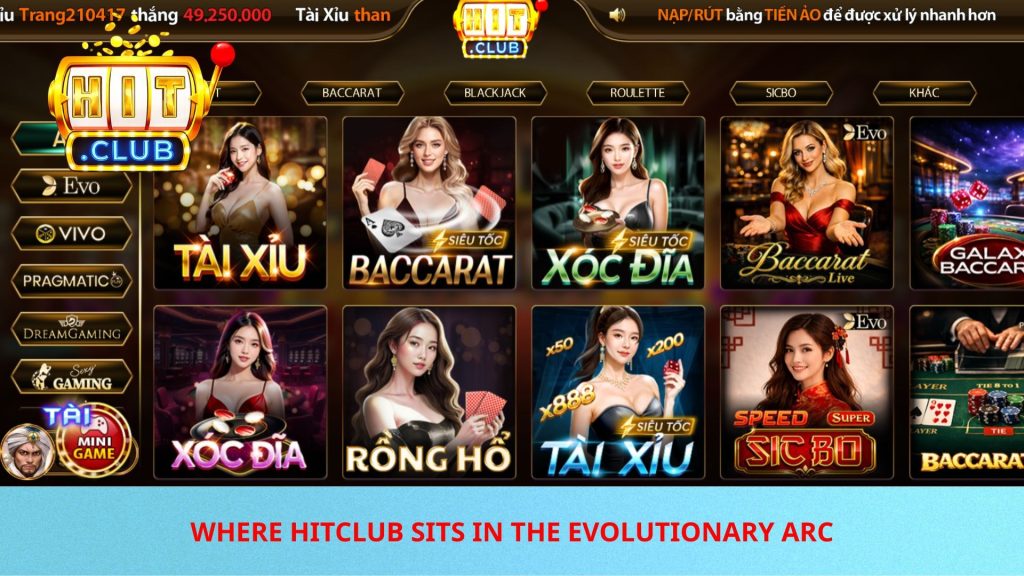
Hitclub entered the market after several of these evolutionary phases had already played out, which means it was built with accumulated industry knowledge rather than having to discover each lesson independently. The mobile-first approach didn’t require unlearning a desktop-first architecture. The transparency practices were built in rather than retrofitted after community pressure. The live dealer section was integrated as a core offering rather than added as an afterthought.
This late-entry advantage is part of why the portal reflects current standards across multiple dimensions simultaneously — it didn’t have to shed earlier versions of itself to get here.
At the same time, Hitclub continues operating during an evolutionary phase that isn’t finished. The personalization of gaming experiences — recommendation systems, individually tailored promotions, UI preferences that persist across sessions — represents the direction the market is moving. Current implementations at most portals, including Hitclub, remain relatively basic by the standards that players familiar with streaming service recommendation engines or e-commerce personalization would recognize.
What the Next Phase Looks Like
The reward gaming portal category is likely to evolve further in the direction of personalization and adaptive experience design — portals that behave differently for different players based on demonstrated preferences rather than offering a uniform experience to everyone. The portals that invest in this direction early will hold a similar advantage to those that invested in mobile infrastructure before it became expected.
Hitclub’s track record of adapting to evolutionary phases as they arrive suggests the portal is oriented toward remaining current rather than defending a fixed product state. Whether that adaptation keeps pace with the next phase of the market will be part of the portal’s story going forward.
Conclusion
Hitclub’s position in the online gaming portal market makes most sense when viewed through the lens of the category’s evolution. The features that define the current portal — mobile-native performance, live dealer integration, transparent financial practices, multi-category game library — are the accumulated answers to evolutionary pressures that the market has applied over more than a decade. The portal didn’t create this evolution; it learned from it and built accordingly. For players evaluating reward gaming portals today, Hitclub represents a product that reflects where the category has arrived — and a portal structured to keep moving as it continues to evolve.