
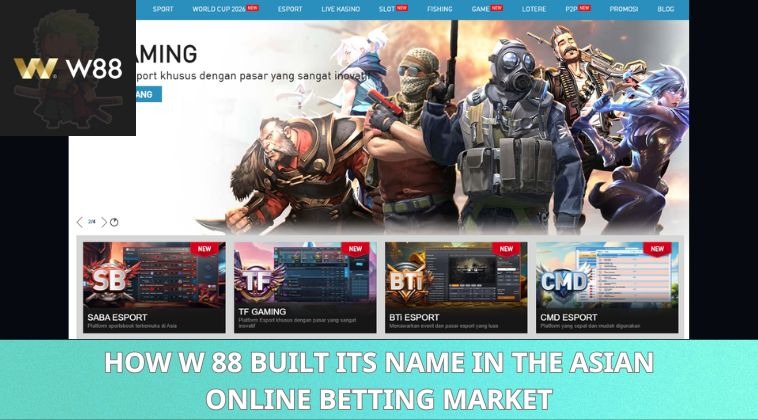
Most betting brands in Southeast Asia follow a predictable arc. Launch with a big bonus offer, attract a wave of new users, then quietly fade as competitors do the same thing louder. W 88 took a different path. It launched in the early 2010s, established a foothold in key Asian markets, and has kept that position through shifts in regulation, technology, and user behavior that reshaped the industry several times over.
That kind of longevity doesn’t happen by accident. W 88 now operates across sports betting, live casino, poker, and virtual games, holding a PAGCOR license and serving a concentrated user base in Vietnam, Thailand, and the Philippines. Understanding how it got there is a more interesting question than most brand profiles bother to ask.
Starting In A Market That Had No Dominant Players
The early 2010s were a formative period for online betting in Southeast Asia. Internet penetration was rising fast. Mobile data was becoming affordable. And the regulatory environment was patchy enough that international operators could establish a presence without the friction that came later.
W 88 entered this space without the brand recognition of European bookmakers or the regional familiarity of locally founded operators. What it did have was a product that covered the markets Asian bettors actually cared about — football, and specifically the Asian Handicap format that dominates how serious bettors engage with the sport in this region.
That focus mattered. AH betting requires different pricing infrastructure than European-style fixed odds. Getting it right from the start positioned W 88 as a credible option for users who knew what competitive margins looked like.
The PAGCOR License As A Foundation
Regulatory clarity wasn’t universal in the early years of Southeast Asian online betting. Plenty of operators launched without any formal licensing framework. W 88 secured a PAGCOR license — from the Philippine Amusement and Gaming Corporation — which provided a recognized legal basis for operations across the region.
This decision had long-term consequences. As user awareness of licensing grew, and as unlicensed operators periodically disappeared or restricted withdrawals without warning, W 88’s licensed status became a differentiating factor. Users who’d seen unregulated bookmakers behave badly treated licensing as a non-negotiable starting point when evaluating alternatives.
Expanding The Product Range Without Losing Focus
W 88 didn’t stay a sports-only operation for long. Casino games, live dealer tables, poker rooms, and virtual sports were added over time — not all at once, but progressively as the user base grew and demand across product categories became clearer.
Honestly, this expansion could have diluted the brand. Bookmakers that try to be everything sometimes end up being nothing particularly well. W 88 avoided that outcome by keeping the sports product competitive while building out the casino and poker sections to a functional standard rather than a token presence.
The result is a multi-product bookmaker where different types of users find enough depth to stay. Football bettors don’t feel like they’re using a watered-down service. Casino players find live dealer tables with stable streaming and flexible table limits. The products coexist without one undermining the other.
Navigating Regional Access Challenges
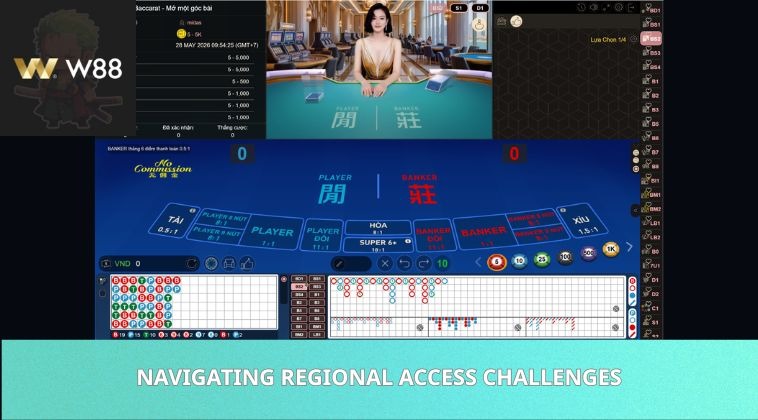
Operating across Southeast Asia means dealing with a regulatory environment that shifts. Domain restrictions, ISP-level blocks, and changing local policies have affected how users in certain markets access W 88 at various points.
The operator’s response has been consistent: maintain mirror links and alternative access points, communicate changes through established channels, and keep the core service running without interruption. This approach isn’t unique to W 88 — it’s standard practice for licensed operators in this space — but executing it reliably over many years requires operational infrastructure that newer entrants often underestimate.
Source: https://w88zoro.com/
Users who’ve been on the site through multiple access changes tend to treat this as background noise rather than a fundamental problem. That familiarity is itself a product of longevity.
The Mobile Transition And How W 88 Handled It
Around 2015 to 2018, mobile betting shifted from a secondary channel to the primary one across Southeast Asia. Operators that had built desktop-first products scrambled to adapt. Some did it well. Others produced mobile apps that were stripped-down versions of desktop interfaces with worse performance.
W 88 built out mobile access that handles live betting under pressure. That’s the threshold test. Pre-match browsing works on almost any connection and any interface. In-play wagering is where the technical requirements get serious — faster refresh rates, cleaner navigation, lower latency. The W 88 mobile app cleared that bar well enough that live betting on mobile became a standard use case for its audience rather than a compromise.
Android installation via APK rather than Play Store is a known friction point. It’s standard across this category due to app store restrictions, but it still catches first-time users off guard. Once past that step, the experience normalizes quickly.
Building User Retention Beyond The Welcome Offer
New user bonuses attract accounts. They don’t retain them. The bookmakers that build long-term audiences do something else: they give regular users reasons to stay after the initial offer expires.
W 88 runs a rotation of event-based promotions tied to football seasons, boxing cards, and regional tournaments throughout the year. These cycle predictably enough that established users know roughly when to expect them. The loyalty points system accumulates across all product categories — sports, casino, and poker — rather than rewarding only one type of activity.
That cross-product structure reflects an understanding of how the actual user base behaves. Most active users don’t stay in 1 product category indefinitely. They move around depending on what’s available, what season it is, and what they feel like on a given day. A rewards system that follows that behavior keeps users engaged across the full product range rather than anchoring them to 1 section.
Conclusion
W 88’s journey to building a recognized betting brand in Asia is a story about consistency applied across a long time horizon. Competitive AH odds from the start. A regulatory foundation that held up as the market matured. A product expansion that added depth without sacrificing quality in the core sports offering. Mobile infrastructure built for how users actually bet. Retention mechanics that outlast the welcome period.
None of these are individually dramatic. Together, they account for why W 88 is still a reference point in Asian betting discussions more than a decade after launch — while many of the operators it competed against in the early years are no longer around to be compared.