
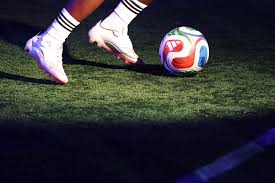
Few moments in football carry the cultural weight of the nutmeg. A skill move that combines technical precision with a degree of humiliation for the opponent, the nutmeg occupies a unique position in the sport’s vocabulary — celebrated by crowds, dreaded by defenders, and studied by coaches analysing both attacking creativity and defensive positioning. Platforms that cover football at depth, including 1xbet mobile download, regularly feature matches where nutmegs serve as decisive moments in chance creation or as indicators of individual technical quality. Understanding nutmeg football meaning, how the move is executed, and why it carries such significance within the sport requires examining it from tactical, cultural, and technical perspectives simultaneously.
The nutmeg is not merely a trick. At its most effective, it is a functional attacking tool that bypasses a defender completely, creates space where none appeared to exist, and generates goalscoring opportunities that more conventional dribbling might not produce.
Football Nutmeg Meaning: The Definition
The nutmeg in football refers to the act of passing or pushing the ball through an opponent’s legs, then collecting it on the other side — effectively bypassing the defender by sending the ball between their feet rather than around them. The move can be executed during a dribble, as a pass to a teammate through a defender’s legs, or during a shooting action where the ball travels between a goalkeeper’s legs into the net.
In all its forms, the defining characteristic is the same: the ball passes through the gap between the opponent’s two feet, leaving that opponent effectively stationary and bypassed. The attacking player either retrieves the ball personally after it travels through, or a teammate collects it when the nutmeg functions as a pass.
The football nutmeg meaning extends beyond the purely technical, however. The move carries a social dimension within the sport’s culture — being nutmegged is considered one of the more embarrassing outcomes for a defender or goalkeeper, while successfully executing the move is treated as a display of both technical ability and audacity. This cultural loading distinguishes the nutmeg from other skill moves that may be technically comparable but carry less symbolic weight.
Origins of the Term
The etymology of the word nutmeg in the football context is genuinely disputed, with several competing explanations circulating across football linguistics discussions. No single authoritative origin has been definitively established, which has allowed multiple theories to persist simultaneously.
One widely cited explanation connects the term to the nineteenth-century spice trade, where nutmegs were occasionally substituted with wooden replicas in commercial transactions — a practice considered a form of deception or trickery. Under this theory, the football nutmeg borrows the connotation of cunning deception: the defender is deceived into creating the gap through which the ball passes.
A second explanation, specific to British rhyming slang, suggests that legs rhymes with nutmegs in the relevant slang tradition, making nutmeg a shorthand reference to the legs themselves. The move, under this reading, is named directly for the body part through which it passes.
A third theory attributes the term to Cockney rhyming slang more broadly, with various regional variants producing similar associations between the spice and the move. None of these explanations is conclusively documented, and football historians have not reached consensus on which — if any — represents the actual origin.
Types of Nutmeg in Football
The nutmeg appears in multiple distinct forms across the game, each with different tactical applications and different levels of technical difficulty.
| Type | Description | Primary Context | Tactical Purpose |
| Dribbling nutmeg | Ball pushed through defender’s legs during a run, collected on the other side | Open play, 1v1 situations | Bypass defender, create space |
| Pass nutmeg | Ball played through a defender’s legs to reach a teammate | Tight midfield or defensive areas | Circumvent press, maintain possession |
| Shot nutmeg | Ball struck through goalkeeper’s legs into the net | Shooting situations | Goalscoring |
| Nutmeg through a crowd | Ball played through multiple players’ legs in congested area | Set pieces, penalty area | Penetrate defensive block |
| Flick nutmeg | Ball flicked or redirected through legs using heel or outside of foot | Advanced technical situations | Disguise and deception |
The dribbling nutmeg and the shot nutmeg are the most common forms encountered at senior level. The pass nutmeg — threading the ball through a defender’s legs to release a teammate — is perhaps the most functionally useful but least celebrated variant, as it does not involve the same direct one-on-one humiliation dynamic as the dribbling version.
Technical Execution
The nutmeg is not primarily a power move — it is a precision and timing move. The attacking player exploits a gap between the defender’s feet that is typically created either by the defender’s natural stance or by a deliberate feint that causes the defender to shift weight and open their legs.
Execution typically involves a low, firm push of the ball rather than a driven pass or shot. The ball must travel through a gap that may be as narrow as thirty to forty centimetres in a well-positioned defensive stance, meaning accuracy is the primary technical requirement. Pace is calibrated so that the ball travels through cleanly without either hitting the defender’s inner leg or rolling too slowly to allow clean collection on the far side.
The most effective nutmegs are preceded by a movement or feint that causes the defender to commit their weight in one direction, widening the gap between their feet momentarily. The attacking player reads the stance, identifies the gap, and executes within a window that may last less than half a second. At the highest level of the sport, this sequence occurs in real time under defensive pressure, making consistent nutmeg execution a genuine marker of technical sophistication.
Nutmeg in Football: Tactical Significance
Beyond its cultural status, the nutmeg carries real tactical value in specific situations. The most significant application is in tight spaces where conventional dribbling around a defender is not available — congested midfield areas, narrow channels, or situations where a second defender’s positioning makes going around the first defender impossible without losing possession.
| Situation | Why Nutmeg Is Useful | Alternative Without Nutmeg |
| Defender closing down quickly | Creates forward momentum without requiring wide space | Back-pass or possession recycled backward |
| Tight wing with sideline behind | Eliminates need for width that does not exist | Risk of ball out of play or tackle |
| Goalkeeper spreading wide | Low shot through legs harder to save than shot to corner | More predictable shot direction |
| Midfield press in narrow area | Penetrates pressing block directly | Requires support pass or physical contest |
| 1v1 near penalty area | Can shift angle for shot without additional touch | Defender recovers and blocks shooting lane |
The goalscoring application of the nutmeg is particularly notable. A shot directed through a goalkeeper’s legs — the goalkeeper’s most structurally difficult area to defend when spread wide — combines accuracy with deception. The goalkeeper who spreads to narrow the angle inadvertently creates the gap that the nutmeg shot exploits. This is not a random outcome but a deliberate targeting of a defensive vulnerability that the goalkeeper’s positioning has created.
Cultural Status of the Nutmeg
The nutmeg holds a place in football culture that exceeds its tactical frequency. At street football and futsal level, where skill moves are more central to the sport’s identity than in the space-based game of elite eleven-a-side football, the nutmeg functions as a social currency — a demonstration of superiority over an opponent that carries reputational implications beyond the result of the match.
At professional level, nutmegs generate crowd reactions disproportionate to their tactical consequence. A nutmeg in a midfield duel that maintains possession produces a louder response than a competent but less visually dramatic defensive contribution of equal value. This asymmetry reflects football’s dual nature as both a competitive sport and a form of entertainment — the crowd responds to what is visually spectacular as well as what is tactically significant.
Defenders who are nutmegged frequently attempt to recover their positioning before acknowledging the outcome. The social dimension of the move — the implied superiority of the attacker — creates an incentive to minimise the visual acknowledgement of what occurred, even when recovery is physically impossible within the relevant timeframe.
Defensive Response and How to Prevent Nutmegs
Defensive coaching addresses nutmeg prevention through stance discipline rather than reactive positioning. The fundamental vulnerability the nutmeg exploits is a wide defensive stance — feet placed wider than shoulder width apart creates a gap that an attacker can target. Coached defensive stances emphasise a narrower foot position that eliminates or significantly reduces this gap.
The trade-off is that a narrow defensive stance is less stable and offers less lateral coverage than a wider stance. Defenders who narrow their feet to prevent the nutmeg accept reduced lateral mobility, which the attacker can then exploit through a conventional dribble to either side. The attacker and defender are essentially engaged in a continuous adjustment process, with each attempting to exploit the vulnerability created by the other’s defensive or attacking choice.
At the highest level, experienced defenders read attacking players’ tendencies — some attackers favour the nutmeg as a first option, others use it only in specific situations — and adjust their stance accordingly. This individualised defensive preparation is part of the pre-match analysis process at elite clubs, where video study of opponents’ technical tendencies informs how defenders position themselves during live situations.